Workers need to stand out around trucks, moving equipment, traffic, dust, rain, and fading daylight. A vest’s color alone doesn’t prove it meets the demands of a job site.
The right High Visibility Safety Vests match the work setting, the hazards, and the worker’s other gear. Contractors should check the ANSI/ISEA 107-2020 Type and Performance Class, then confirm fit, coverage, features, care instructions, and replacement plans.
A practical purchase starts with where crews work and what may approach them.
Key Takeaways for High Visibility Safety Vests
- Match vest Type and Class to the work zone, not the color or price tag.
- Roadway construction requires Type R Class 2 or Class 3 apparel, not Class 1.
- Fluorescent fabric improves daytime contrast, while retroreflective trim helps drivers see workers after dark.
- A Class E lower-body garment supplements a Class 2 or Class 3 top. It is not standalone protection.
- Comfortable, correctly sized gear gets worn, inspected, and replaced when it no longer performs.
High Visibility Safety Vests: A Contractor Buying Guide That Fits the Job
High-visibility safety apparel helps separate a worker’s body from the background. Fluorescent background material provides contrast in daylight, especially in gray weather or dusty work zones. Retroreflective material returns light toward its source, such as vehicle headlights.
ANSI/ISEA 107-2020 sets requirements for garment design, color, visible-material amounts, reflective performance, configuration, testing, and labeling. The CDC PPE-Info standard listing identifies the three garment Types and performance classifications used in U.S. safety apparel.
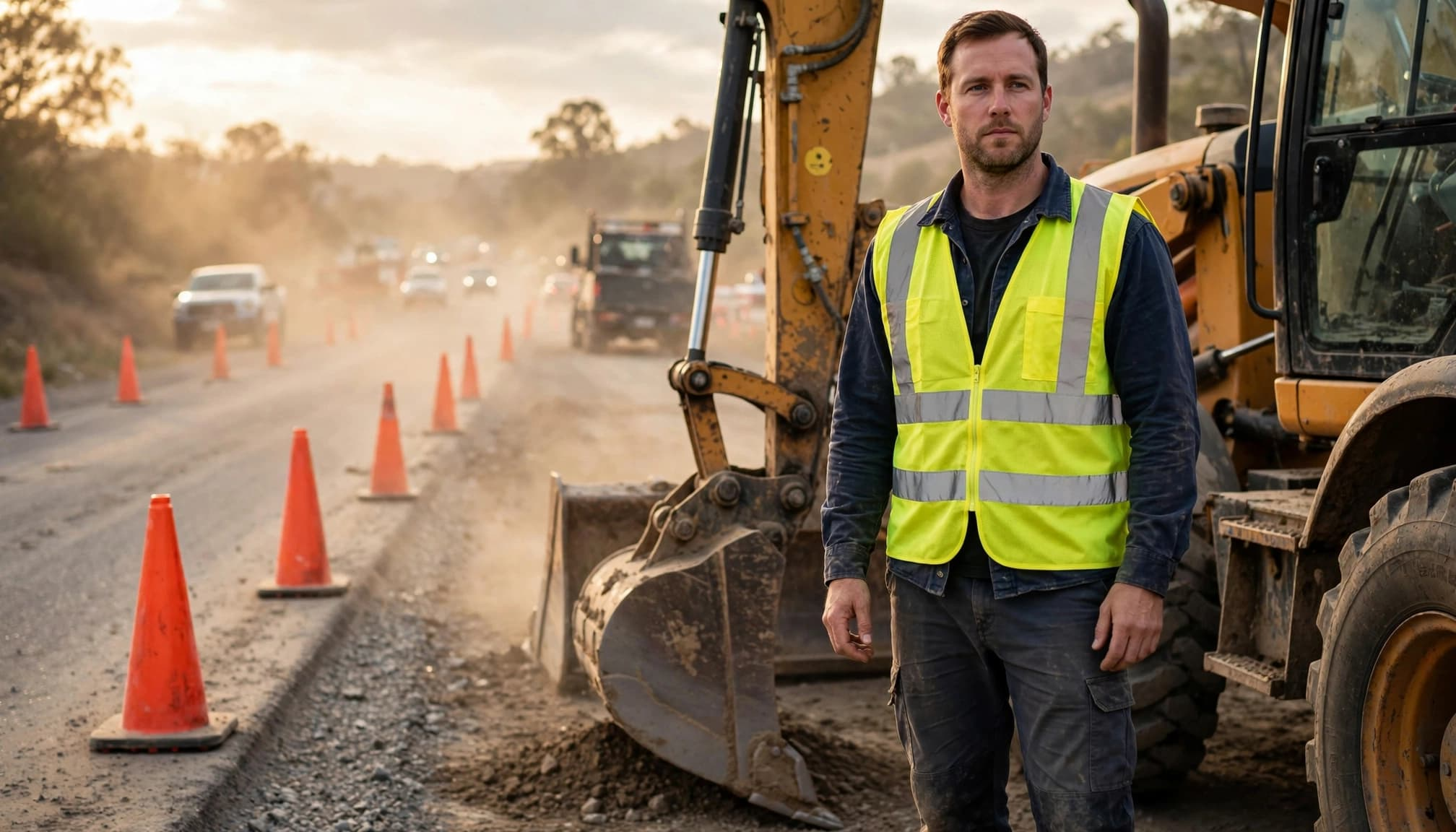
Higher class is not automatically better for every assignment. A worker in a separated equipment yard faces a different hazard than a flagger beside live traffic. Start with the setting, vehicle speed, worker location, background conditions, and task duration.
Type O, Type R, and Type P: Match the Vest to the Work Setting
Type O apparel is for off-road work where workers face moving equipment or vehicles but not public roadway traffic. Examples include warehouses, private yards, loading areas, mining sites, and separated industrial work areas. Type O is available only as Class 1.
Type R is for roadway and temporary traffic-control zones. Road crews, utility contractors, survey teams, airport ramp crews, and workers near public rights-of-way usually need Type R apparel.
Type P is for public safety personnel, emergency responders, and law enforcement. Before buying, identify where a worker stands and what can approach them. That simple review often points to the correct Type.
Class 1, Class 2, Class 3, and Class E Explained
Class 1 is Type O only. It fits lower-risk, separated work areas where approaching equipment moves slowly.
Class 2 is common for roadside tasks, flagging, surveying, airport ramp work, and many construction assignments. Class 3 adds more visible material and body coverage. It suits high-speed traffic, complex backgrounds, night work, poor weather, and jobs where drivers need more time to recognize a person.
Class E covers pants, bib overalls, shorts, and gaiters. Worn with a Class 2 or Class 3 top, Class E can raise the ensemble to Class 3. Class E is never a standalone top.
How to Choose High Visibility Safety Vests for Roadwork and Outdoor Crews
For roadway construction, OSHA-related work-zone guidance accepts Class II and Class III garments. Class I apparel is not suitable for road construction work. In many standard roadside conditions, a Type R Class 2 vest is a practical choice. However, a Class 3 garment is often the smarter choice when traffic moves faster or visibility drops.
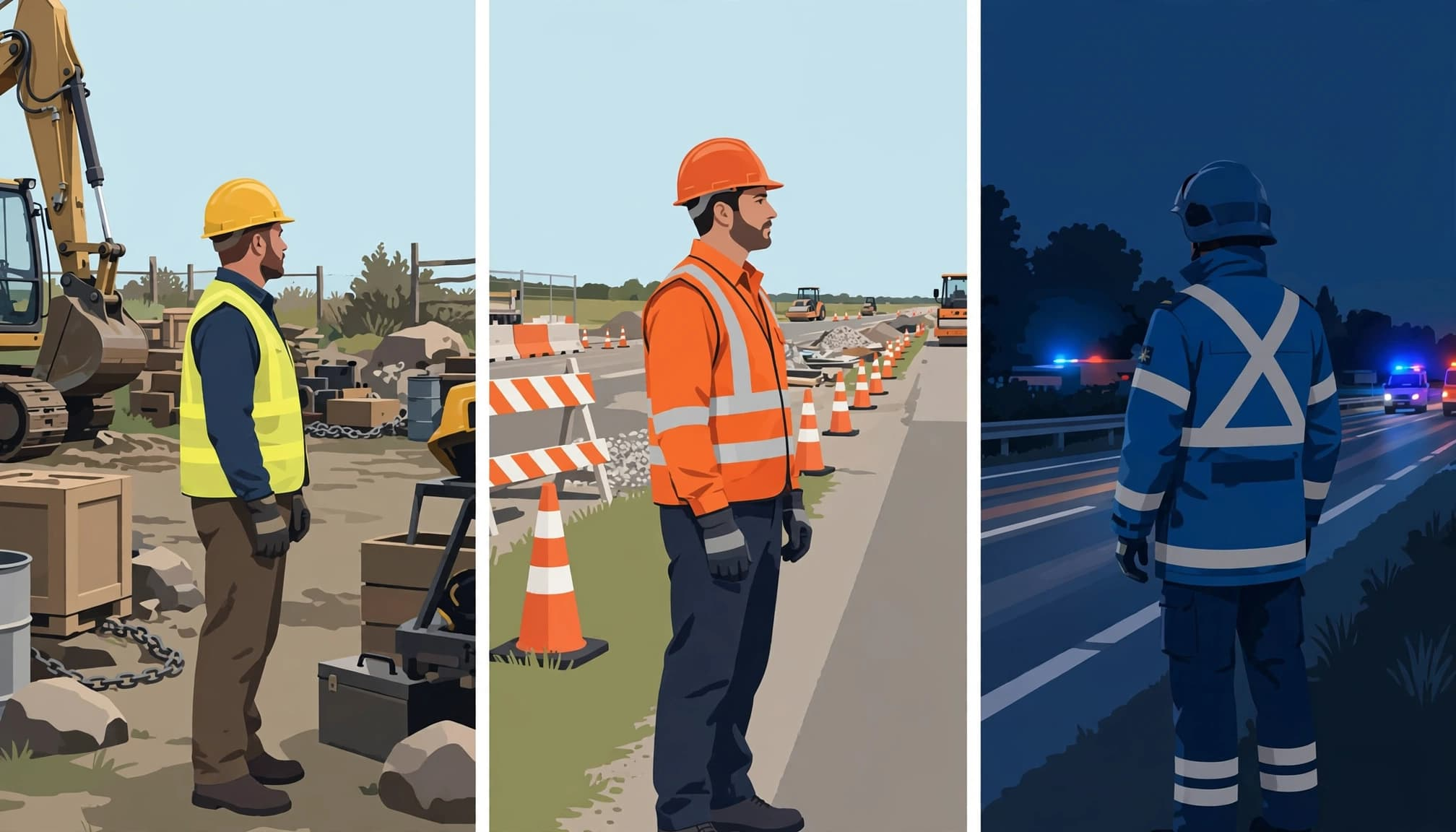
The ANSI overview of high-visibility apparel confirms that garment Type describes the intended work environment, while performance class reflects visible-material coverage.
Use Traffic Speed, Distance, and Light Conditions to Set the Class
A worker in a slow equipment area may need Type O Class 1, provided public traffic stays outside the work area. Standard roadside construction and utility work often call for Type R Class 2.
Highway work, night shifts, lane closures near fast traffic, and long exposure distances call for serious consideration of Type R Class 3. Dawn, dusk, rain, fog, blowing dust, and dark pavement all reduce contrast.
Fluorescent material works best in daylight. Retroreflective striping matters when headlights or work lights become the main illumination. OSHA guidance has stated that nighttime outer garments should use suitable retroreflective colors and allow recognition from at least 1,000 feet. Always follow the site safety plan, contract requirements, and applicable local rules.
Check ANSI Labels, Coverage, and Material Requirements
Look for a clear ANSI/ISEA 107-2020 label that states both the Type and Performance Class. Phrases such as “safety yellow” or “reflective vest” don’t confirm compliance.
For standard sizes, a Type R Class 2 garment has about 775 square inches of background material and 201 square inches of retroreflective material. A Type R Class 3 garment has about 1,240 square inches of background material and 310 square inches of retroreflective material.
Smaller sizes can have permitted variations in background area. Reflective-strip width, placement, and body coverage still matter. Confirm the exact product documentation before placing an order.
Vest Features That Improve Comfort, Visibility, and Daily Use
Workers are more likely to wear gear that fits, breathes, and works with the tools they carry. The best high-visibility safety vest for a crew is one that meets the required classification without becoming a burden by mid-shift.
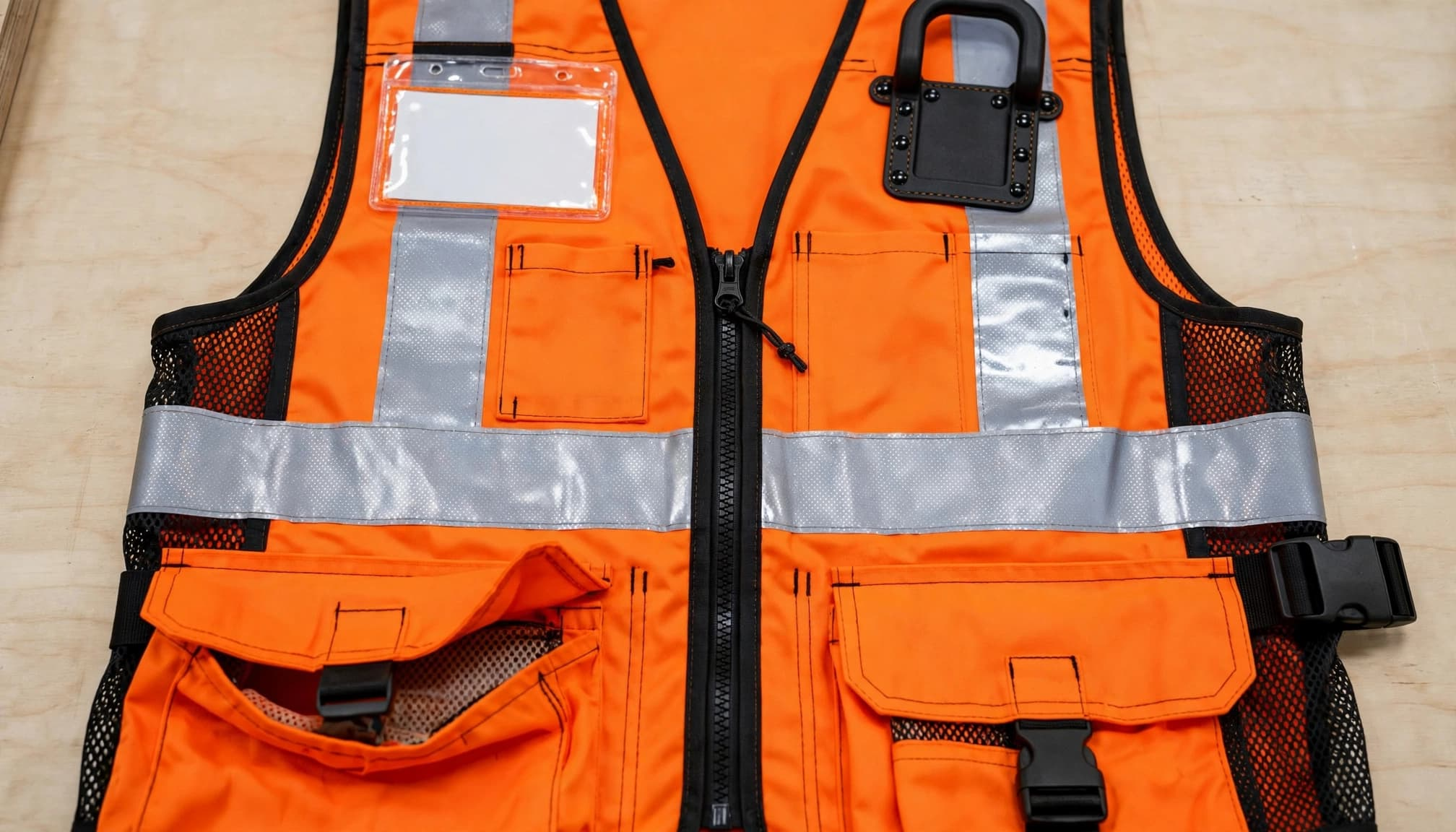
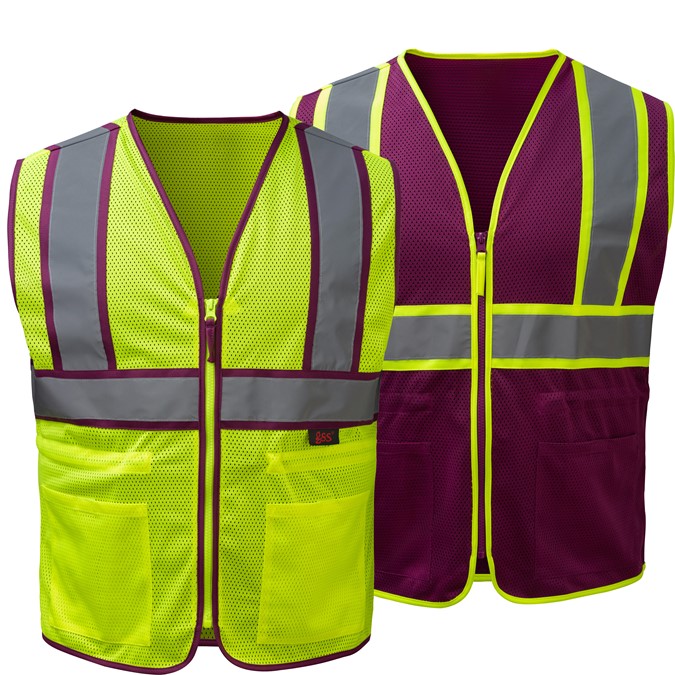
Mesh vests help in hot weather. Solid fabric often holds up better against abrasion, wind, and cooler conditions. Two-tone and contrast designs can help keep reflective bands distinct when a vest gets dirty.
Choose a Fit Workers Can Wear Over Work Clothes
Measure the chest and allow room for a base layer, hoodie, rain shell, or winter jacket. Manufacturer sizing charts are more reliable than a guessed size, especially when ordering for a mixed crew.
Adjustable side straps help, but loose material can snag on equipment. Class 3 garments need the required sleeve and shoulder coverage to remain visible as the worker moves.
Have workers test the vest with their normal tools, fall-protection harness, radio, and gloves. Tool belts, harness straps, and jackets must not hide required reflective material.
Select Materials for Heat, Rain, Dirt, and Repeated Washing
Mesh is lighter and cooler, though it can snag or wear faster in rough work. Solid fabric is usually tougher and more weather-resistant, but it can feel hotter during summer work.
| Material | Best fit | Tradeoff |
|---|---|---|
| Breathable mesh | Hot, dry shifts and low-abrasion tasks | Less protection from wind and rough contact |
| Solid fabric | Cooler weather, dirty work, and frequent abrasion | Heavier and less ventilated |
Follow the care label. Dirt, paint, oil, fading, cracked reflective tape, torn seams, and peeling trim can reduce visibility. Replace a vest when its fluorescent color fades, its reflective material fails, or it no longer fits safely.
A Contractor’s Buying Checklist for Reliable Crew Gear
Before ordering, list each worker’s job tasks, work zone, traffic exposure, shift time, climate, required PPE, and expected garment wear. Then compare products by verified Type and Class, size range, closures, coverage, care instructions, and model-level documentation.
Manufacturers such as Kishigo and PIP offer multiple styles, but no brand name proves that every item meets the same requirement. Review the exact label and features for each model. The Kishigo ANSI class guide is a useful reference when comparing coverage categories.
Costs vary by garment class, fabric, pockets, breakaway construction, customization, order volume, and supplier. Request current quotes for the specific models under consideration.
Avoid Common Buying Mistakes That Leave Visibility Gaps
Color-only purchases create the most common problem. A yellow vest may lack the Type R label and material coverage needed for roadwork.
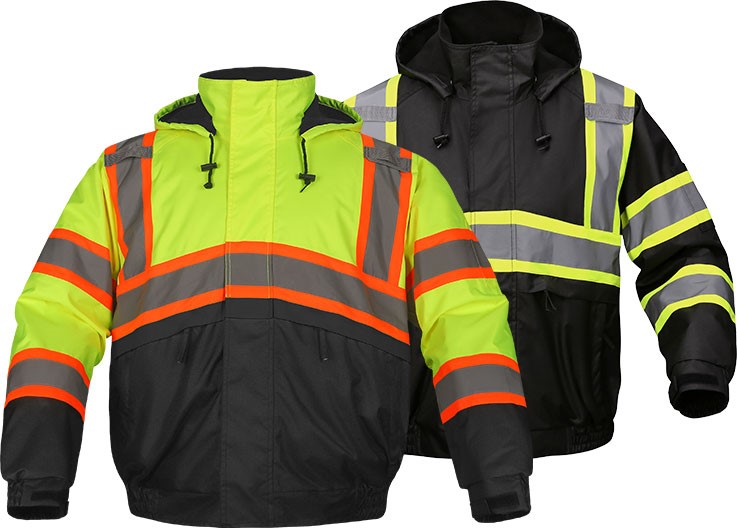
Other mistakes include buying Class 1 for roadway jobs, treating Class E pants as a complete solution, ordering vests too small for outerwear, and covering reflective bands with jackets or tool belts. One vest style rarely fits every job.
Before placing an order, supervisors should confirm:
- Each job category has a written Type and Class requirement.
- Crew members have sizes that fit over seasonal workwear.
- Harnesses, jackets, and tools leave visible materials uncovered.
- Spare garments are available for new hires, visitors, and damaged gear.
Plan for Crew Sizing, Care, Replacement, and Customization
Collect measurements or stock a small, planned size range before ordering in bulk. Keep spare vests in work vehicles and at site entrances, especially where visitors or short-term workers need immediate protection.
Company names, logos, and department marks can be useful, but they cannot block required background material, reflective trim, or the ANSI label. Do not alter compliant garments without confirming that the modification preserves their classification.
Set regular inspection dates. Replace garments by condition, not by an arbitrary promise of unlimited service life. The Class 1, 2, and 3 comparison can also help supervisors explain why the same crew may need different apparel.
When Job Conditions Change During a Shift
A vest choice may need to change with the work. A crew that begins in a protected yard can later move to a shoulder closure. Rain can turn an ordinary daytime task into a low-visibility assignment within minutes.
Keep higher-coverage gear available when workers may enter roadway zones, work after sunset, or assist with traffic control. The employer’s hazard assessment and site safety plan should drive that decision.
A garment’s label matters only when the vest is worn correctly, fully visible, and in usable condition.
Frequently Asked Questions
Can a worker wear a high-visibility T-shirt instead of a vest?
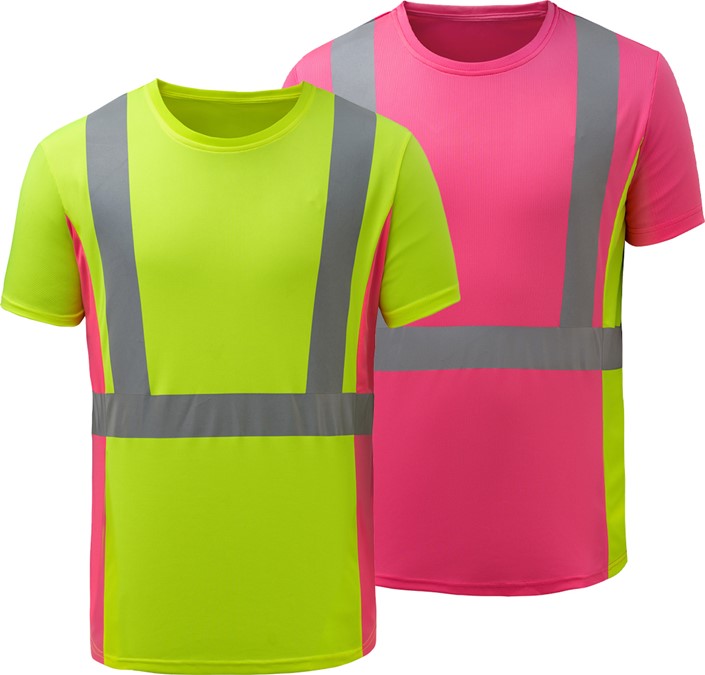
Yes, if the shirt carries the required ANSI/ISEA 107-2020 Type and Performance Class label for the assignment. The same checks apply to shirts, jackets, rainwear, and vests. A bright shirt without the proper label may not meet the job requirement.
Does a reflective vest work in complete darkness?
Retroreflective material needs a light source, such as headlights, to return light toward a driver. It does not replace work-zone lighting, traffic control, or safe worker positioning. Fluorescent fabric has limited value once daylight disappears.
Are breakaway vests a good choice for construction crews?
Breakaway closures can reduce snag hazards near moving machinery, conveyors, and rotating equipment. However, the vest must still fit securely and carry the correct Type and Class label. Match the closure style to the hazards workers face.
Can a logo be added to an ANSI-rated vest?
A logo can be added only if it does not cover reflective bands, required background material, or the compliance label. Ask the supplier to confirm the customized model still meets its stated classification. Large back graphics often create avoidable visibility problems.
Choose Gear Crews Will Wear Every Shift
Start with the work setting and the level of struck-by risk. Then verify the ANSI/ISEA 107-2020 Type and Class, body coverage, fit, durability, and care needs before you buy.
Class 2 is often a strong choice for ordinary roadway work. Class 3 gives workers more visibility near high-speed traffic, in poor light, and across longer approach distances, subject to the site’s safety plan and applicable requirements.
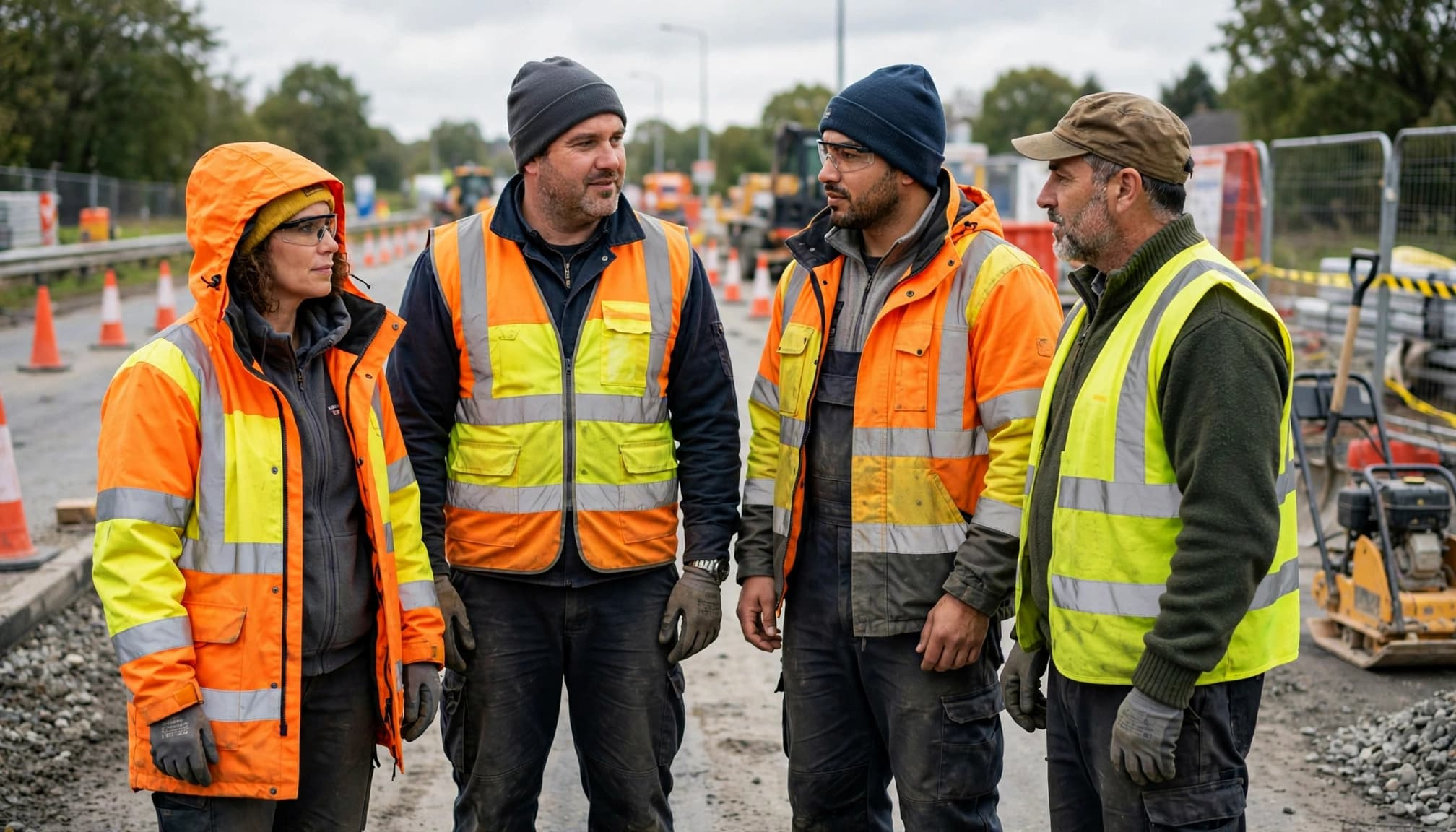
Properly labeled, comfortable high-visibility gear helps crews stay seen and ready for the conditions they face each day.
Browse Collection
Find the best and trending outfits.